Showing posts with label Medieval. Show all posts

Sunday, November 17, 2013

On Mass Killings: The Importance of "Cultural Ether"


NB -- this was originally published at Medium, where no one saw it (probably deservedly). Regardless, I'm republishing it here. 

*****

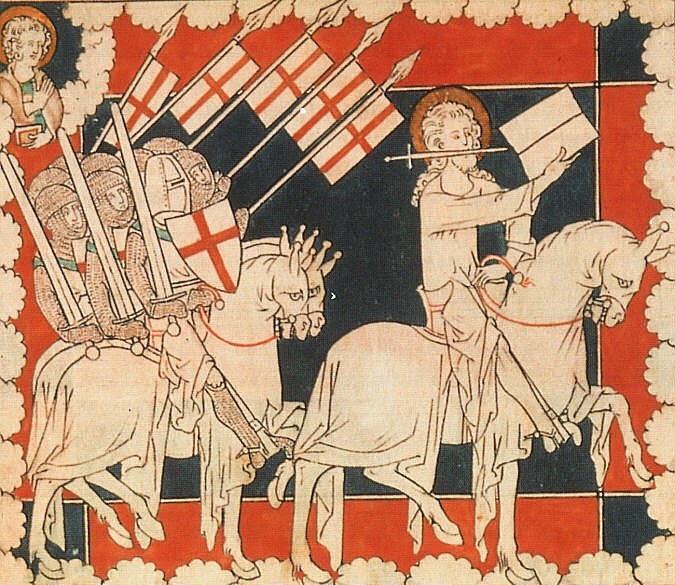
BL MS Royal 19B XV, f. 37v.
(early 14th c.)
There’s a lot to like about Ari Schulman’s article in last week's The Wall Street Journal. The very best part is simply this:
“Underlying this grim national ritual, and the pronouncements from all quarters that mass shootings are ‘senseless,’ is the disturbing feeling that these acts are beyond our understanding.”
Schulman then goes on to explain why this itself doesn’t make sense. Psychologists and criminologists know plenty about why they happen, and the reasons are then enumerated (complete with bullet-pointed list). Don’t talk about the shooter. Don’t talk about his (almost always a him) motives. Don’t focus on the victims’ families. Prevent the next event by talking down the significance of this last one. Don’t feed the mental illness of the next mass killer by giving him something to aspire to.

But that list strikes me as problematic — problematic because its prescriptions move towards a trivialization of the event itself in the name of preventing future events. In other words, its prescriptions move the event towards that same “senslessness” that the author decries. Schulman tries to avoid this:
Rampage shootings are fed by many other sources that also must be addressed, of course… [But] these factors are more or less perennial problems of human life and cannot, alone, bear the blame for rampage shootings. In coverage of these events, the focus on insanity particularly risks playing into the need of potential future shooters to convince themselves that the world rejects them, rather than the other way around. The minority who really are psychotic, or just act impulsively, are even more likely to draw their ideas from the cultural ether.
He moves in a productive direction but then draws back, finding comfort in a move towards pathologization. Mass killers become semi-automatons, “activated” by their predecessors, all related, easily categorized. We scientize them.

Tuesday, July 9, 2013

Call for Papers: The Exegetical Turn (Kalamazoo 2014)


Killing a heretic, killing a dragon.
BL Harley 2886

Biblical verses were never "naked" in the early Middle Ages. They were clothed in the heavy garments of tradition & weighed down with the burden of commentary. We have the tendency to see an 11th-century monastic chronicler cite Jeremiah and think "Jeremiah," when we shoul dbe thinking, with the author & intended reader, "Hrabanus," "Haimo," "Paschasius," and "Jerome." We tend to forget that men of the early Middle Ages, and the 10th and 11th centuries especially, encountered the Bible through Carolingian and Patristic commentaries. 

This session will therefore seek to see what precisely we may have missed, to reconsider historical, literary, and/ or artistic artifacts from the Middle Ages in light of the exegetical tradition in which they were created. Then, in turn, this session will allow us to ask if this new understanding of how these objects were created and received fundamentally change how we understand the European Middle Ages itself.     

Session sponsored by Virginia Tech Medieval & Early Modern Studies.

Proposals, with Participant Information Form, should be emailed as PDFs to Prof. Matthew Gabriele by September 15, 2013.

Thursday, June 20, 2013

Conferences and the Medievalist Community

One of the new things we've been trying on this blog is Facebook integration (shorter: we have a Facebook page), following the lead of places like In the Middle. Anyway, I posted something on my personal Facebook page on Sunday 6/16, referring to a number of complaints I saw about entitlement and the process of selecting sessions at Kalamazoo. We can talk about that if people like but, to my mind, the conversation got really interesting.  Essentially, one person suggested that the new Medieval Studies conference at SLU would pick up disgruntled attendees of Kalamazoo. That prompted my response below.


I then asked (after some more discussion) if I could bring that discussion public and the feedback was positive, so here it is. I don't want to use other peoples words without permission, so I'll try to summarize and then offer some thoughts.

One person keyed on my use of "need" and rightly questioned by what standard we'd judge that. Others chimed in to say that we do indeed need multiple conferences because of the disciplinary and temporal diversity in our field, but perhaps as supplementary to existing conferences. This could be modeled on the MLA, which has 1 main conference but then respected regional conferences as well (and I know the American Academy of Religion and American Sociological Association also operate on this model). Further complicating this, however, it was pointed out that even with this larger/ smaller conference structure around 1 organization, there are numerous other groups that host conferences that might be of interest -- the AHA, MESA, the 3/4 (not sure SLU is among the big 3 yet, even if it might be someday) medieval conferences, above, not to mention any independent conferences that might appear in any given year.

And that's kind of my point. As medievalists, we don't have "our" conference. And why can't we? What we have now is this:
  • Medieval Academy -- used to be old, stodgy, and patriarchal, though that's better -- but not fixed -- now (or maybe I'm just older). Now not trusted because of the stuff with the former Executive Directors, though I think both sides overplayed their hands and didn't come off looking all that well. 
  • Kalamazoo -- big conference, established. Democratic in culture in that rank/ prestige seem to matter much less here than anywhere else. Can be overwhelming to newbies sometimes. Has gained a reputation for a distinct "literary" bent to its program. This year, some have complained about the selection of panels and how they didn't get what they "deserve." The location is difficult to get to and it occurs at a difficult time for a lot of academics who aren't quite done with their semesters.
  • Leeds -- big conference, established. Has gained a reputation for a distinct "historical" bent to its program. Expensive. New venue in the city center could be good or bad. Relatively democratic in culture. A bit insular, in that this seems to be "the" medieval conference that UK academics attend every year. This can be good or bad -- good if you know people, alienating if you don't.
  • SLU -- new (this is its 1st year). Remains to be seen what it is and what'll become of it.
So what to do? Can one of these serve? Should one of these serve?

I don't have a good answer to this but I want to see what more people have to say about it. Let me, however, close with a few observations.
  1. Let me observe that there's only 1 "big" European medieval conference, whereas there's 2/3 in the US. 
  2. Let me observe too that many of the complaints/ issues about specific conferences have a disciplinary tinge to them -- they don't like this or that because of what's there, which isn't the "right kind" of medieval stuff they're interested in. Too literary or too historical...
  3. Finally, let me observe that this is a particular issue to me as we observe travel budgets becoming increasingly meager. I've always been willing to dip into my own personal income to go to conferences and have been fortunate enough to be able to do so, but I know that that's not a common thing. Grad students, assistant professors, adjuncts, etc. don't have that luxury. Wouldn't it be nice to have 1 large conference somewhere that everyone, across discipline and specialization, could meet to collaborate? Is that a pipe dream?

Sunday, February 10, 2013

Our own Orientalism: Why Medievalists are Complicit when Manuscripts Burn and Ruins Crumble

(Modern Medieval is pleased to host this guest post by Prof. Rabia Gregory, University of Missouri-Columbia)

Last month, as French ground forces moved into Mali at the request of Mali’s interim President, horrified whispers spread across the internet: Timbuktu’s manuscripts were in peril. On January 28, the French army moved to recapture Timbuktu amidst rumors that a retreating militia, perhaps the Salafist group Ansar Deine, had torched the Ahmad Baba Library. Later reports revealed that Ansar Deine had protected the Ahmad Baba Library, that the majority of manuscripts had been kept safe by African curators and local citizens, and that rumors of fire were stoked by a Sky News reporter embedded with the French army and confirmed by Hallè Ousmane, Timbuktu’s mayor, exiled 800 km away in Bamako. As images of scorched manuscripts on the tiled floors of the Ahmad Baba library began circulating, medievalists voiced a visceral outrage: to us, more than anyone, the destruction of books is an unfathomable act of barbarism. When fighting in Aleppo set the medieval souks aflame, threatened the Crac des Chevaliers, and endangered Palmyra and Old Damascus, and imperiled the manuscripts of Timbuktu, my friends and colleagues turned to Facebook and blogs to lament that they could never understand how anyone could so callously destroy their own cultural heritage. As if destroying manuscripts marked humans as dangerously different, or subhuman. As if our own armies had not destroyed vast collections of unique manuscript in Hamburg, Dresden, Baghdad, Mosul, Sarajevo, and elsewhere. As if we had forgotten how poor planning, corruption, war, and disaffected citizens had doomed  many of “our” libraries—the 2009 collapse in Cologne, the 1870 bombardment and fire which destroyed Strasbourg’s library and museum, the wholesale destruction and appropriation of books across Europe between 1914 and 1945, the floods which have permanently closed 12 libraries in Louisiana, damaged collections in Iowa, and endangered archives across the Eastern Seaboard. Arson has destroyed more books in the US and UK than in Africa: in 1986, an arsonist destroyed over 400,000 books and manuscripts in the Los Angeles County Library, and the sole surviving copy of the Beowulf manuscript, (BL Cotton Vitellius A. xv.) was damaged by fire in 1731; other unique manuscript copies,including the Life of Alfred, did not survive. Last year, a disgruntled alumnus vandalized and attempted to burn down our main research library last year sprinklers saved the building but water and smoke damaged many books and some of the Missouri State Historical Society’s collection.  Though we now find it quaint and amusing, the Bodleian’s famous oath recognizes the threat fire poses to libraries.

Western-educated medievalists are complicit in the ongoing destruction to medieval culture in Africa and the Near East, just as we passively allow the defunding and desecration of medieval archives and medieval studies programs in Europe and the Americas. There can be no apology for criminal actions under the guise of war, no excuses for the weak corrupt governments which cling to power exploiting the citizens of Africa and the Near East. But, as a medievalist who works with German manuscripts, and an Arab-American who follows the news from the Middle East closely, I must point out that many of the worst losses of medieval books and buildings have occurred in Western Europe. As we sit in our offices accusing them of barbarism, many Arabs and Muslims are mobilizing to protect medieval artifacts and memorializing ongoing tragedies through medieval poetry. The destruction of books, by fire or war, should not be an incomprehensible “act of barbarism” to medievalists, who habitually nuance the “barbaric” and often find our own western manuscripts have been lost to war or fire. My own research is hampered by the losses at libraries in Lübeck, Wroclaw, Dresden, and Strasbourg. Only a small portion of the 100 boxes of medieval manuscripts relocated by the Wroclaw City Library in 1943 under threat of bombardment have been recovered; those lost to fire will never resurface. I expect simplistic narrative of savage Muslim destroying priceless antiquities in incomprehensible acts of barbarism from reporters compiling stories from wire reports. Medievalists, many of whom are widely read in postcolonial theory, and invested in recovering evidence of marginal peoples, should know better.  

Friday, November 16, 2012

Among the Barbarians

I'll soon be attending my very first conference of the AAR -- American Academy of Religion. I'm hoping to blend in but if you don't hear back from me in a week or so, send in the marines.

source: http://thegeekinvasion.com/fail/day-45-realize/

Monday, November 5, 2012

Revisiting the "Judeo-Christian" Tradition

Just to toot my own horn for a moment, I have just co-edited a special issue of the journal Relegere: Studies in Religion and Reception, 2:2 (2012) entitled "Revisiting the 'Judeo-Christian' Tradition." Some really wonderful essays there (and my mediocre one), especially in that many of them try (successfully, I think) to bridge chronological gaps and move between ancient/ medieval and modern.

Check it out at http://relegere.org/index.php/relegere/issue/view/32.

Monday, November 21, 2011

The specre of '68, student activism and the 'student university'

A spectre is haunting UK higher education, that spectre is 1968. The protests which took place during the late 1960s represent the high water mark for student activism in Europe and abroad. Inspired by student protests and the civil rights movement in America, and the Prague Spring and similar uprisings in eastern bloc countries, students and workers joined forces in central Europe to oppose the Vietnam war, demand economic and political reform, and to lobby for greater participation in the university management. During protests in Rome students there closed the university there for 12 days while British students demonstrating against the Vietnam war attacked the Defence Secretary, the Secretary of State for Education and the Home Secretary. Spanish students, protesting against the sanctioning of a mass for the soul of Adolf Hitler, closed the university of Madrid for over a month. Most spectacularly however were the events in Paris in May 1968. The Union Nationale des Étudiants de France called a march to protest the earlier police invasion of the Sorbonne which resulted in riots and the arrest of hundreds of students. The widespread condemnation of the heavy handed reaction of the authorities, and the students support from trade unions and wildcat strikes and occupations, brought France to the very brink of revolution.[1]

Student protest never disappeared from our streets, but since the 1960s it has been marginalised, separated from wider political forces such as the trade union movement and stifled by the close association between NUS and the Labour party with its progressive shift to the ‘centre’. More recently however events have conspired to re-ignite the flame of student protest. The anger towards the introduction of tuition fees has simmered away for over a decade and the proposed hike in UK fees saw large scale protest and unrest in the streets of London last year. This increase in activism and political awareness coincides with the burgeoning anti-capitalist movement in the form of ‘Occupy Wall Street’ and copy-cat occupations in London etc inspired by another ‘Spring’, this time the Arab Spring.

Already the increased buying power of undergraduates soon to be paying £9,000 per annum for their university education has inspired some institutions to increase contact hours, improve teaching standards and improve campus facilities and accommodation for students in an effort to appear to be ‘better value for money’.[2] The student movement on the other hand seems momentarily perplexed by their increased clout, brought on by the very changes which to which they opposed themselves so vehemently. ‘Students not Consumers’ read one banner during a protest which took place on the campus of Swansea University (inspired perhaps by the title of an earlier article in the New Statesman), a call which has been echoed in various editorials and even a statement from one pro vice-chancellor.[3] The call for increased student participation in the running of universities and control over the delivery of content is certainly not a new phenomenon, and certainly anyone with any knowledge of the structure of the medieval university would see curious parallels which may perhaps inform future debate.

The medieval universities organised themselves around two broad archetypes. Both were in a sense ‘teaching universities’ as the Humboldtian research university was a 19th century development. The first and perhaps most important archetype was the universitas magistrorum et scholarium or ‘Masters Universities’ of Northern Europe, such as Oxford, Cambridge and Paris. The Masters university were those organised and administered by the professors and teachers who worked within the corporation. It is this model of the university which survives to this day, with every institution in the modern world organised along similar lines. In medieval Bologna however, the alma mater of all European universities, the university existed in a radically different form. The ‘students universities’ were so called because their corporate structure was entirely controlled by the student body. They elected their own representatives, they paid the salaries of the professors and enforced strict regulations concerning the number of teaching hours, the pedagogical methodology and even the content to be delivered.[4]

To the modern mind the fact that the students controlled the university may seem startling, and to the permanent residents of university towns across the country perhaps even horrifying. It is worth bearing in mind however that these students were not fresh-faced undergraduates of 17 or 18 such as now, but were on average much older scholars who would have usually had some prior training in the Arts, which was the equivalent in the universities in northern Europe of an undergraduate degree. In a sense the Bolognese student university was more like a university controlled by post-graduates. The increased appetite for ‘informed choice’ in modern UK institutions, for some, spells the end of the Humboldtian research institution or, at least, the birth of a two tier university system with some institutions focused more on teaching. What if, buoyed by the greater buying power and the amplified confidence and vocalism brought on by the recent increase in activism, students call for a return to the medieval model of the ‘student university’, albeit in a revised format for the modern world?

This ‘student university’ model arose organically within medieval Bologna, it was not founded or established in the modern sense, and the institution developed as a result of the unique conditions in which the scholars and professors found themselves. The power within the university in Bologna was not won by political activism per se but bought by the relative wealth of its students, and the professors reliance on those students for their livelihood. The professors at Oxford, Cambridge and Paris meanwhile, as a result of these institutions strong ecclesiastical association, were usually beneficed clergy. They had an independent income stream and thus were not as vulnerable to the demands of the scholars, who could withdraw their fees if unsatisfied. The medieval students in Oxford were criticised in the 70s by Allan Cobban, perhaps himself influenced by the spectre of ’68, for their seeming lack of desire to try and wrestle control of the university out of the hands of the Masters. For Cobban the medieval undergraduate at Oxford was too naive and immature for the rigours of university governance, not to mention his (medieval students were exclusively male) heavy workload. Perhaps there is a parallel to be drawn here: To what extent are undergraduates willing to take on the fiscal responsibility, or capable of administering the bureaucratic machine, that is the modern university? One other noticeable feature of the ‘student university’ is the relatively short lived nature of these institutions. While Bologna, Sienna, Padua et al are all successful universities today, the student-run element disappeared during the fourteenth century. There was nothing inevitable about the failure of the student university, but when the Communes (i.e the towns in which the university were hosted) began to pay for some, and then all, of the professors’ salaries this short lived experiment was over. The students never lost their say in university affairs in Bologna but they no longer had the power to ensure that their voice was heard by withdrawing their fees.

What the history of the medieval university brings to the modern discourse on the future of Higher Education is the certainty that whomever pays for the professors holds the power. With the slashing of education budgets, and the increase in tuition fees, the balance of power is once again shifting in favour of the students. The age of the average undergraduate today is older than that of medieval Oxford (sometimes as young as 14), but not as high as that of medieval Bologna, nor do the students today have the same level of prior education. So perhaps today’s undergraduates are still not best placed to decide what they need from their education system. What of graduate participation? Surely there can be no objection to students who have been through the education system taking a more active role in re-shaping it based on their experiences? To an extent this already happens, but the former students at the centre of administering and governing the university are all academics, and academics educated within the research institution. Undergraduate training took the form of the prerequisite training for research in that chosen field, but with academic posts become fewer and fewer, and student intake rising, this is perhaps no longer a sustainable model. This once again resurrects the ghost of the ‘student university’, but perhaps one with greater participation from the alumni community but the realisation of this alternative seems as fraught with difficulties as asking youngsters fresh out of school to take on the responsibility of administering the university.

It seems inevitable that the Higher Education system in Britain will become more student led, more student focused and more concerned on delivering content than research. This is not necessarily a bad thing, pedagogy is not and never has been a high priority of UK universities. Greater student and alumni participation is also surely to be welcomed, as the beneficiaries of the education system it is only right that they have a say in the content that is being delivered, but the adoption of the medieval style ‘student university’ model is perhaps a step too far. Or, is it?


[1] There is a fantastic display of photographs of these events and similar ones across Europe contained in the “Museo Europeo degli Studenti” in Bologna.
[2] http://www.guardian.co.uk/education/2009/mar/19/students-demand-value
[3] http://www.newstatesman.com/blogs/cultural-capital/2011/07/students-work-education
http://studentactivistdiary.co.uk/index.php/swansea-says-students-as-partners-not-consumers-november-9th-campaign-action/
http://www.guardian.co.uk/education/mortarboard/2009/nov/03/higher-education-framework1
http://www.birminghampost.net/news/west-midlands-education-news/2011/07/01/university-chief-says-students-should-not-be-treated-as-consumers-65233-28979402/#

[4] The best summary of the history medieval Universities is still Rashdall’s The universities of Europe in the Middle Ages despite the recent flurry in studies of the individual institutions. The collection of essays edited by Hilde de Ridder-Symoens called A History of the University in Europe provides a more up to date and nuanced study for those wishing to expand their reading.