Showing posts with label disciplines. Show all posts

Sunday, November 17, 2013

On Mass Killings: The Importance of "Cultural Ether"


NB -- this was originally published at Medium, where no one saw it (probably deservedly). Regardless, I'm republishing it here. 

*****
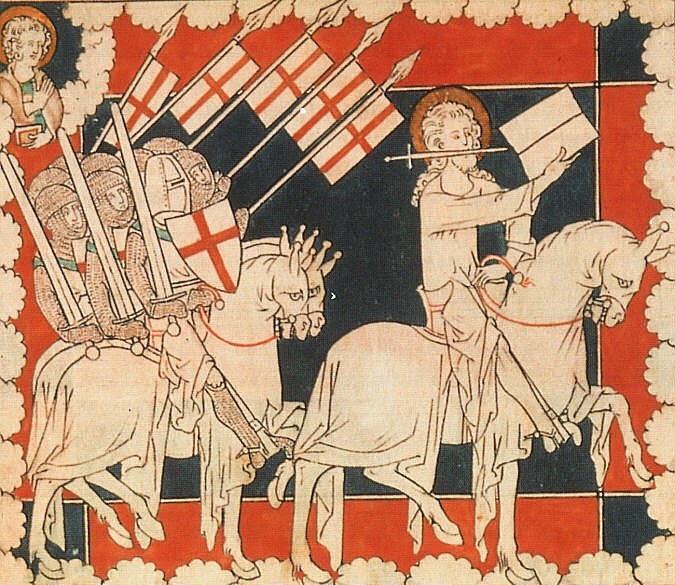
BL MS Royal 19B XV, f. 37v.
(early 14th c.)
There’s a lot to like about Ari Schulman’s article in last week's The Wall Street Journal. The very best part is simply this:
“Underlying this grim national ritual, and the pronouncements from all quarters that mass shootings are ‘senseless,’ is the disturbing feeling that these acts are beyond our understanding.”
Schulman then goes on to explain why this itself doesn’t make sense. Psychologists and criminologists know plenty about why they happen, and the reasons are then enumerated (complete with bullet-pointed list). Don’t talk about the shooter. Don’t talk about his (almost always a him) motives. Don’t focus on the victims’ families. Prevent the next event by talking down the significance of this last one. Don’t feed the mental illness of the next mass killer by giving him something to aspire to.

But that list strikes me as problematic — problematic because its prescriptions move towards a trivialization of the event itself in the name of preventing future events. In other words, its prescriptions move the event towards that same “senslessness” that the author decries. Schulman tries to avoid this:
Rampage shootings are fed by many other sources that also must be addressed, of course… [But] these factors are more or less perennial problems of human life and cannot, alone, bear the blame for rampage shootings. In coverage of these events, the focus on insanity particularly risks playing into the need of potential future shooters to convince themselves that the world rejects them, rather than the other way around. The minority who really are psychotic, or just act impulsively, are even more likely to draw their ideas from the cultural ether.
He moves in a productive direction but then draws back, finding comfort in a move towards pathologization. Mass killers become semi-automatons, “activated” by their predecessors, all related, easily categorized. We scientize them.

Sunday, March 18, 2012

NeMLA and the Disciplinary Perspective


I just returned home from a weekend in Rochester for the Northeast Modern Language Association Convention, which was a great event. Here I'll just offer some reflections on the conference while it's all fresh in my mind.

Arriving in the later afternoon on Friday, I only attended panels on Saturday and Sunday morning: several paper panels yesterday, including one that I co-organized on "Continuities in English Literature between the Norman Conquest and Reformation," and one seminar session this morning.  Our panel was the only one dedicated to medieval English literature, and one of only a handful of sessions on medieval topics at all (a few others on Italian and French medieval literature, for example). While the lack of medieval topics (and, generally, topics relevant to my own work--very little on literature and religion) disappoints me, I do understand the size and breadth of scholarship for NeMLA makes any specific area a small subject in the large scheme. That said, I was very happy with the turnout of audience for the panel, the papers were great, and questions and conversation afterward were productive and fun.

Also despite the desire for more medieval topics, the lack necessitated that I use my conference time seeking out other potentially interesting or helpful panels. So I attended one panel on graduate student work and departmental life; another on fairy tales in film adaptations; and, finally, a seminar-style session on the undead in popular culture. [As an aside, I must say that I really like the seminar style session, in which 5-6 essays were pre-circulated to participants (though I was not among them), and presenters gave 5-10-minute snapshots of their arguments, with much of the time left for discussion--all an interesting alternative to standard 3-4-paper panels.] It was nice to see how even fields far out from my own have ways of intersecting with my own work. For example, attending the panel on the undead led to thinking about the boom in zombie narratives over the last few decades and reimaginings of "apocalyptic" and "post-apocalyptic" narratives, and a fruitful conversation with friends about apocalyptic literature and thought in the long history of Western society.

What all of this reminds me--and I'm grateful for this reminder--is the much wider academic community to which I belong and with which I should be in dialogue. The ICMS at Kalamazoo every year also reminds me of the huge field in which I work, but a conference like NeMLA does an even better job of revising my perspective. I work not only in Old English studies; nor only in medieval studies; nor only in English literature/language--I work in the broader field of cultural analysis, stretching across centuries, geographies, languages, disciplines, and boundaries. It is good to keep this in mind, and it was good to see this in action.